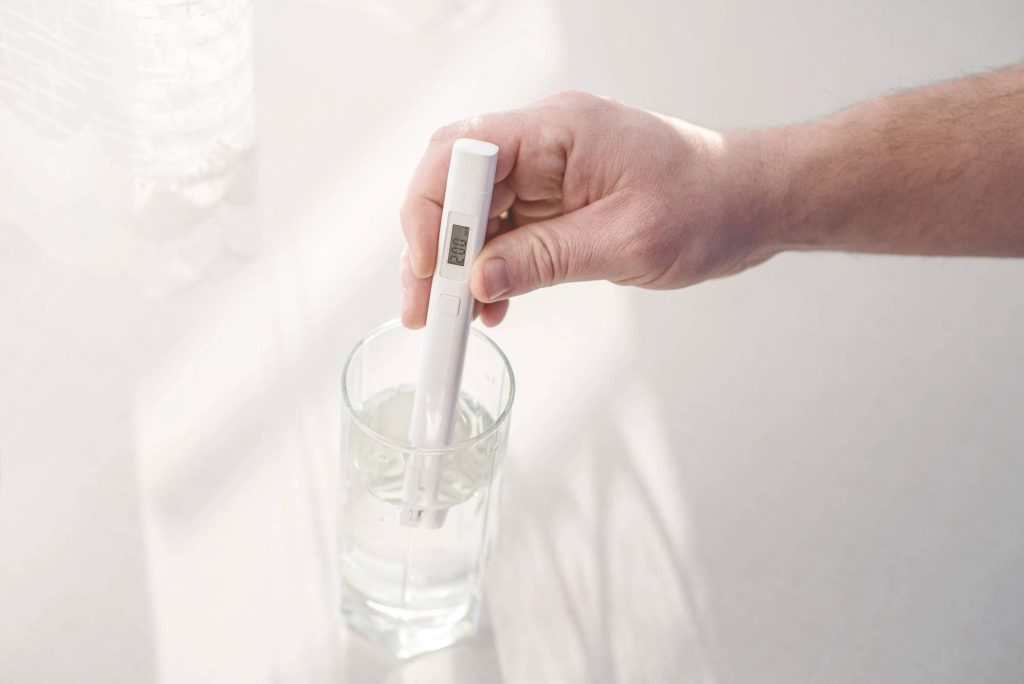
Water testing labs in Manhattan provide the reliable laboratory analysis needed to determine whether lead is present in your home’s drinking water. Testing is especially important for protecting children, who are particularly vulnerable to the developmental and physical effects of lead exposure.
Because lead is colorless, odorless, and tasteless, it cannot be identified through sight, smell, or taste. Laboratory testing is the only dependable way to measure its presence and concentration.
Understanding the Risk
Lead in drinking water typically originates from the corrosion of plumbing materials—such as lead pipes, service lines, or lead-based solder—rather than from the water source itself (World Health Organization [WHO], n.d.; Dvorak, n.d.). Homes built before 1986 are at higher risk due to the historical use of these materials (Maru, n.d.).
Children absorb lead more readily than adults, and even low-level exposure can lead to irreversible damage, including developmental delays, behavioral issues, lower IQ, and anemia (Dvorak, n.d.). Because of these risks, the Centers for Disease Control and Prevention (CDC) recommends that all children undergo blood testing to monitor for lead levels (Dvorak, n.d.).
How to Properly Sample Your Water
To obtain an accurate measure of your household lead exposure, follow these best practices for sampling:
- Consult Local Guidelines: Before testing, check if your local water utility provides sampling kits or specific instructions, as they may have specific procedures for local water chemistry.
- The Stagnation Period: Lead leaches into water that sits stagnant in pipes. To accurately capture the “worst-case” scenario, allow the water in your home to sit unused for at least six to nine hours (e.g., overnight) before collecting a sample (Kestin, 2017; EPA, 2002).
- Do Not Remove Aerators: Do not remove the faucet aerator before sampling. Lead particles often accumulate in these screens, and removing them may result in an inaccurate, lower lead reading (Kestin, 2017).
- Sampling Technique: Use a clean sample container provided by a certified laboratory. Collect the “first-draw” sample immediately after the stagnation period by turning the tap on to a high flow rate and filling the container (Kestin, 2017).
- Consider Sequential Samples: Because lead levels can vary based on the distance of your home from the water main, consider taking a series of sequential samples. This helps determine if the lead is coming from the service line or a specific internal fixture (Kestin, 2017).
Immediate Risk Reduction
If you are concerned about lead in your water, you can take these steps while waiting for test results:
- Flush the Lines: If the water has gone unused for several hours, run your cold water tap at a high flow rate for three minutes before using it for drinking or cooking (Kestin, 2017; EPA, 2002).
- Use Cold Water Only: Never use water from the hot water tap for drinking, cooking, or preparing baby formula, as hot water leaches lead from plumbing more effectively than cold water (Dvorak, n.d.).
- Avoid Boiling: Boiling your water will not remove lead; in fact, it may increase the lead concentration through evaporation (Dvorak, n.d.).
References
- Dvorak, B. I. (n.d.). Drinking Water Contaminants: Lead. DigitalCommons@UNL. https://digitalcommons.unl.edu/cgi/viewcontent.cgi?article=1335&context=civilengfacpub
- EPA. (2002). LEAD in Drinking Water. https://www.epa.gov/sites/default/files/2015-09/documents/2002_5_17_lcrmr_guidance_lcmr_lead_public_education_poster_v1.pdf
- Kestin, J. (2017). Detecting Lead in Household Tap Water: Sampling Procedures for Water Utilities. Harvard Law School. https://clinics.law.harvard.edu/environment/files/2017/11/Lead-In-Tap-Water-FINAL-Nov.-2017.pdf
- Maru, S. (n.d.). Lead Exposure in Children through Water and Soil. TopSCHOLAR. https://digitalcommons.wku.edu/cgi/viewcontent.cgi?article=1003&context=pubh_560
- World Health Organization. (n.d.). Lead in Drinking-water. https://iris.who.int/bitstreams/06797b29-e725-4cff-960a-bdc0bc57a612/download